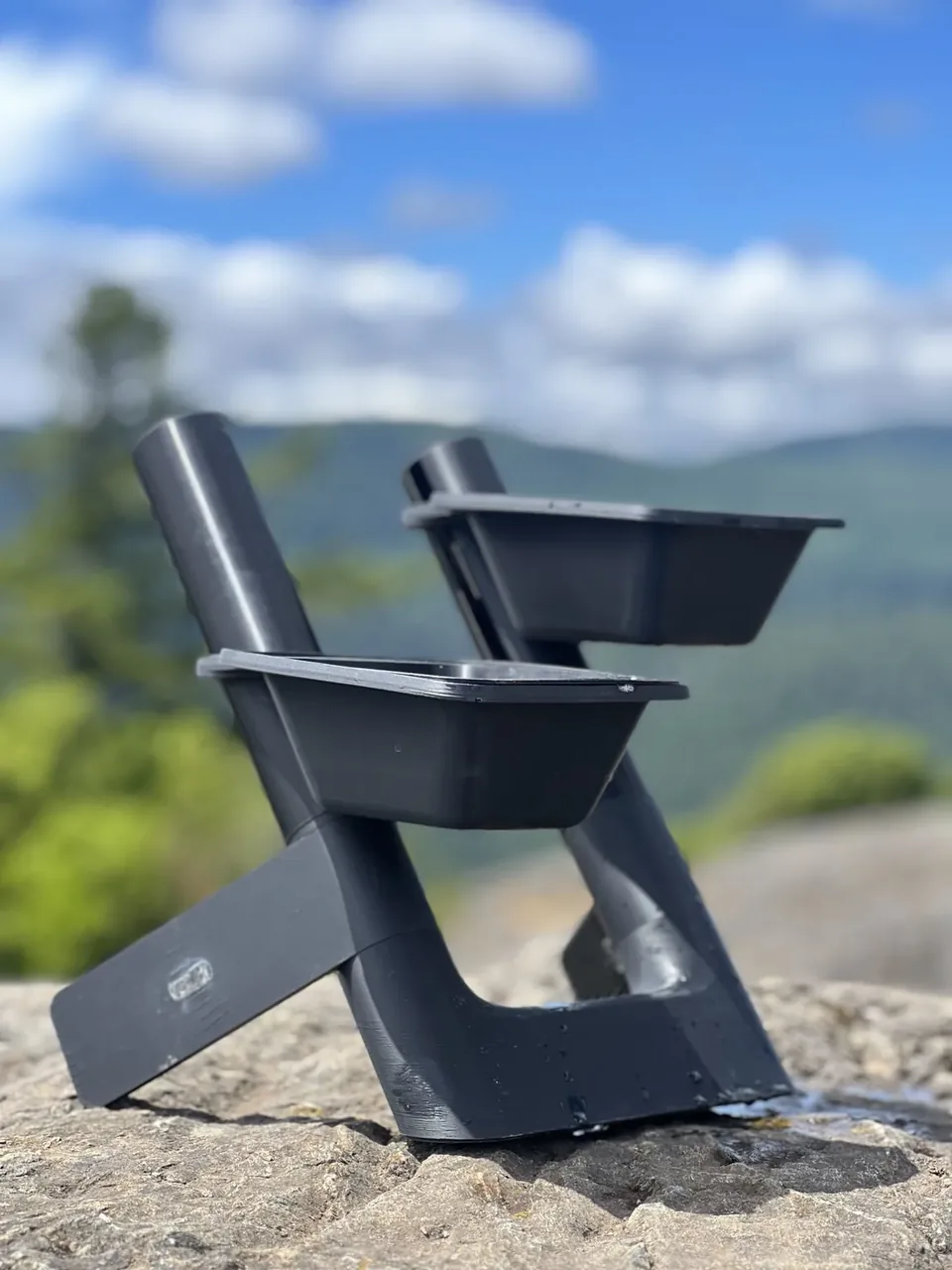

Stack inside.
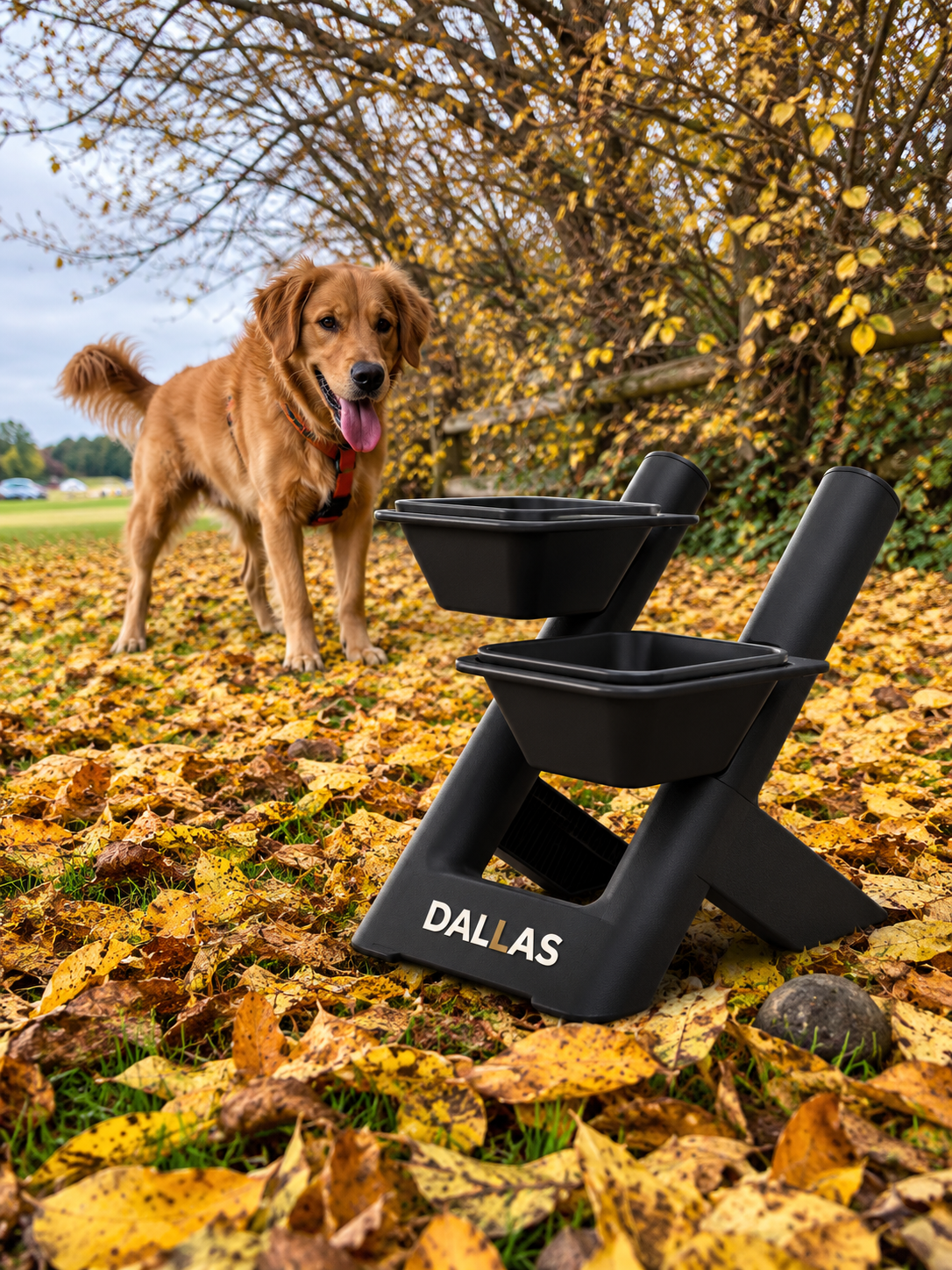
Place one bowl inside the other for a slim, low-profile configuration when space matters most.
COMPACT CARRY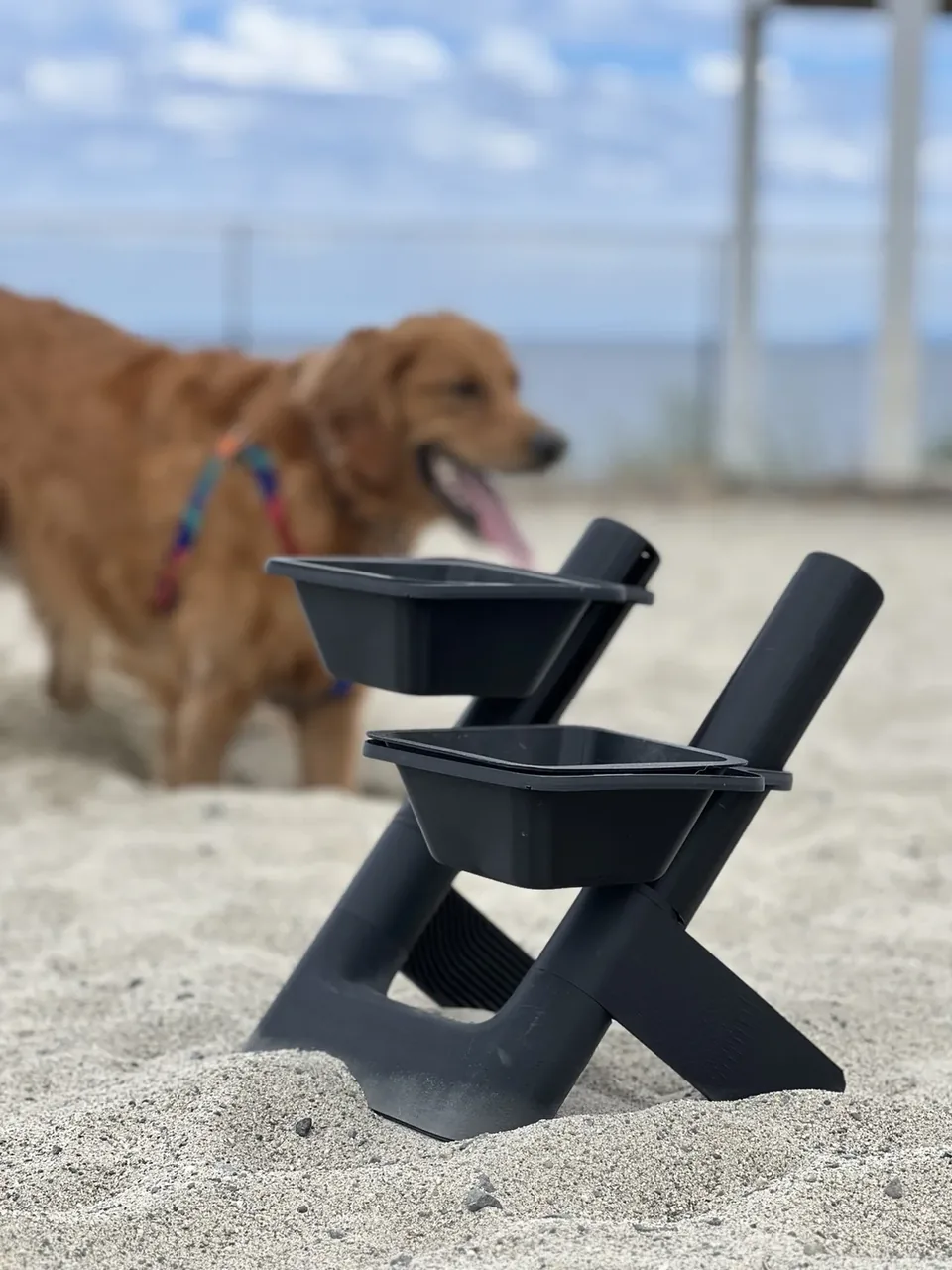 Real prototype · Beach
Your dog grows. Your adventures change. Why shouldn’t your dog’s feeding station adapt with you? Meet The Dog D.A.D. — an adjustable, fold-flat feeding station with two ways to pack the bowls for wherever life takes you.
↘ Folds flat for travel · See the transformationIllustrative 12-position preview · Actual adjustment spacing, travel and locking mechanism require physical verification.
The Dog D.A.D. is designed to transition from a raised two-bowl feeding station to a compact travel form. Its bowls can be packed two ways: nested together for a slimmer profile, or with one flipped over the other to create a space for carrying dry food. A practical all-in-one idea for day trips, travel and everyday adventures.
One working prototype was shown going from packed to ready in under a minute. Final production timing and folding durability still require testing.
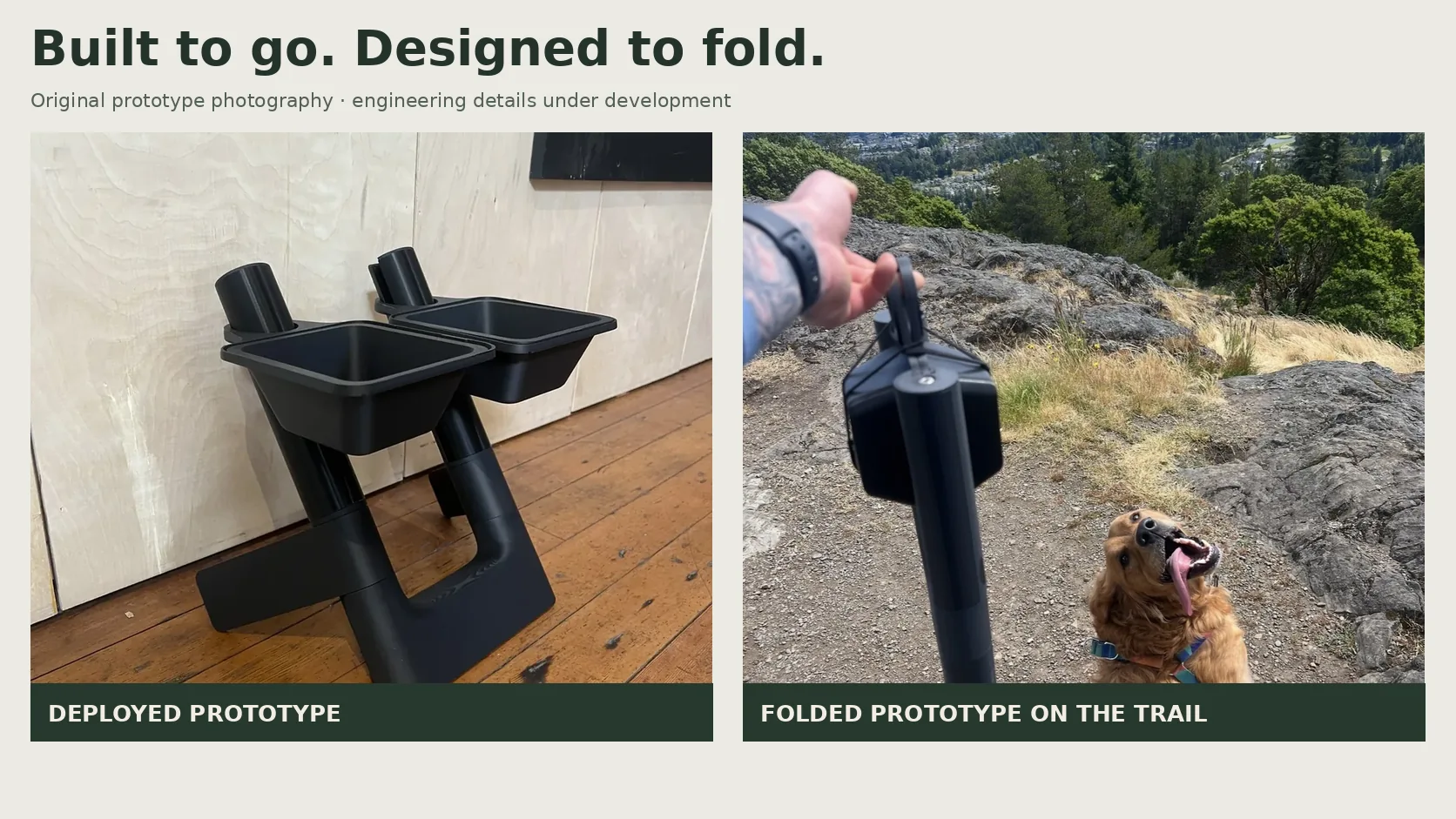
A closer look at the folded-flat Evergreen concept — no sideways scrolling required.
Illustrative design concept. The final manufactured geometry, materials and performance remain subject to validation.
The same two bowls are designed to serve two distinct packing modes. Choose a low-profile setup for compact transport, or turn one bowl over the other to carry a portion of dry food within the bowl assembly.
Place one bowl inside the other for a slim, low-profile configuration when space matters most.
COMPACT CARRYTurn one bowl over the other to create a compartment for a dry-food portion—handy for a day trip or travel.
DRY-FOOD STORAGE CONCEPTShown with a real early prototype. Final food-contact materials, bowl retention, closure security and food-storage performance still need verification. Not represented as airtight or leakproof; clean and dry bowls before storing food.
See how The Dog D.A.D. sets up ↗The Dog D.A.D. means Dallas Adventure Dish. But the idea began long before there was a product.
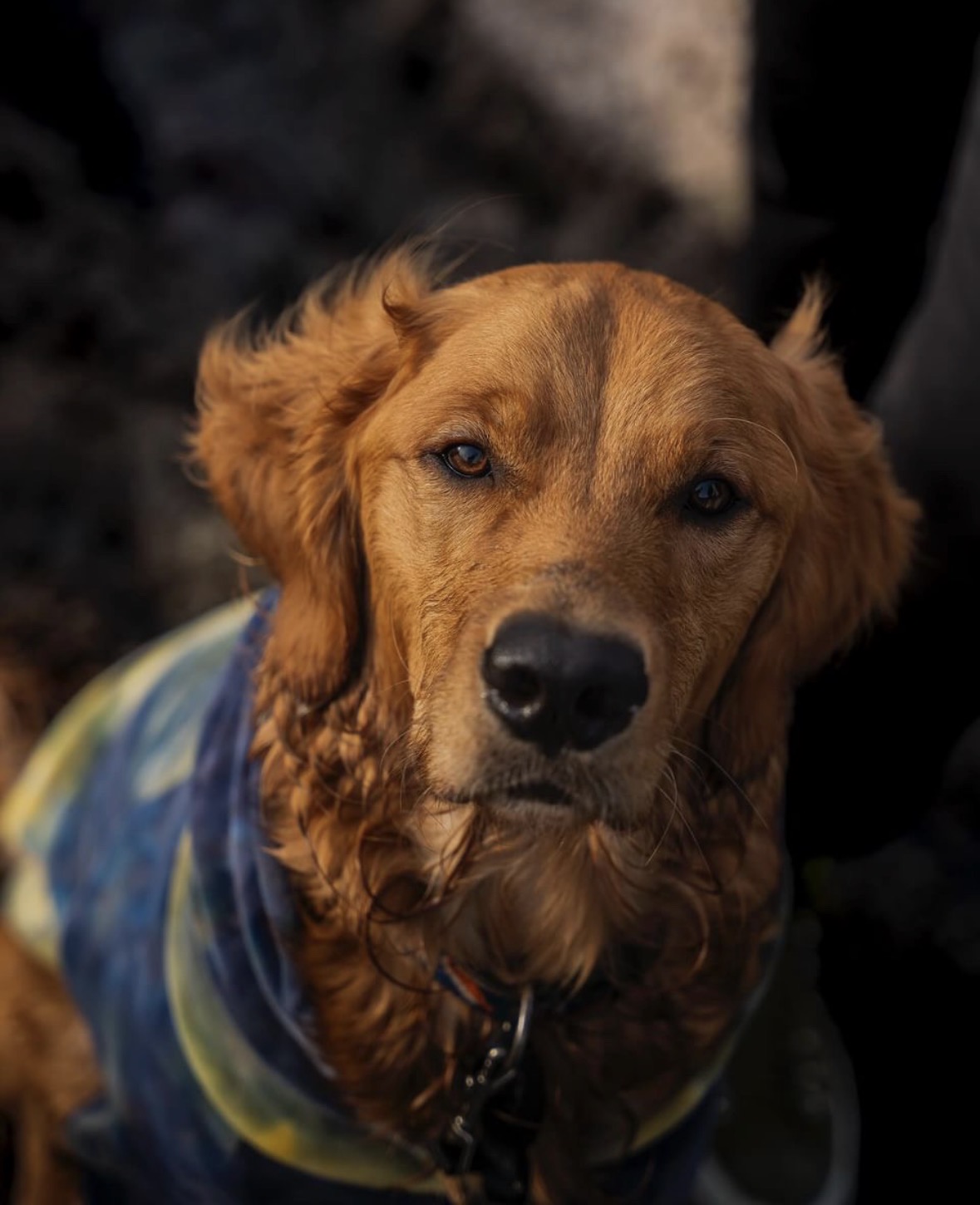
When Dallas was nine months old, he started bringing his meals back up after eating from a bowl on the floor. I wanted to try a different feeding setup, so I used the tools I had: a stack of my old engineering technician textbooks, with his bowl propped on top.
After I raised the bowl, the episodes stopped. I also noticed him eating more slowly—and his tail started wagging during feeding time. That was my experience with Dallas, not a medical diagnosis or proof that elevation caused the change.
“The first version wasn’t built in a workshop. It was propped up on my engineering textbooks.”
As I looked into feeding positions, I learned that some dogs, including some older dogs with mobility limitations, may benefit from adjusted setups. I also learned that raised feeders are not suitable for every dog. That is why I wanted something adjustable, not another fixed-height stand.
That first stack of books became the starting point for 12 planned height positions, two independently adjustable bowls, and a fold-flat design that can travel with us.
Dallas’s experience is a personal observation; vomiting or regurgitation can have medical causes and should be discussed with a veterinarian.
Your dog grows. Your adventures change. Why shouldn’t your dog’s feeding station adapt with you?
Introducing The Dog D.A.D. — Dallas Adventure Dish — a high-quality, adaptable feeding station designed for your dog’s changing needs and wherever life takes you.
With 12 planned height settings, two independently adjustable bowls, a fold-flat design and two bowl-packing modes, the concept gives owners greater control over feeding at home and packing for the road.
Why does height matter? Dogs vary in size, and their mobility can change with age or health. For some dogs, an adjusted bowl position may make feeding easier; for others, especially those at risk of bloat, an elevated food bowl may not be appropriate. Learn why individual fit matters ↗
No more bulky feeding stands. No more juggling multiple feeding setups. Nest the bowls for compact travel, or invert one over the other to carry dry food for the trip. Our prototype demonstration shows setup in under 60 seconds.
Because your dog deserves quality, and you deserve convenience. Stop buying bowls for where you are. Invest in one designed for everywhere you’ll go.
Explore positions from 1 through 12 as your dog's needs and feeding situations change.
Separate height positions for food and water, illustrated in the 3D preview.
Demonstrated in prototype footage. Final assembly, stability and ease of use still require validation.
Explore positions from 1 through 12 as your dog's needs and feeding situations change.
Separate height positions for food and water, illustrated in the 3D preview.
Demonstrated in prototype footage. Final assembly, stability and ease of use still require validation.
Product in development. Adjustable range, materials, locking performance and folding durability are not finalized or certified. Prototype demonstrations are not manufacturing specifications.
See a real prototype demonstration of The Dog D.A.D. moving from folded travel mode to a ready-to-use feeding setup. This video documents one prototype moment and does not guarantee final production speed, materials, locking performance, or long-term durability.
Prototype demonstration only. Final materials, geometry, carrying fit, and setup mechanism may change before any production version exists.
The Dallas Adventure Dish is being developed around a simple idea: give your dog one familiar food-and-water station for the everyday routine, the beach, the trail and wherever comes next.
Two independently height-adjustable bowls give food and water their own positions, illustrated in the interactive preview.
Twelve planned positions give owners flexibility as a dog grows or their needs change. The right setup depends on the individual dog—not a one-size-fits-all height.
The bowls can nest for a slim profile or be arranged face-to-face as a dry-food carry compartment. The physical prototype folds flat, with setup demonstrated in under 60 seconds. Closure performance is not yet verified.
The Dog D.A.D. material study brings brushed metal surfaces together with a muted Evergreen palette. These are proposed component specifications shown in concept renders, not finalized production materials.
Proposed durable food-and-water bowl surfaces with a clean, understated satin finish.
Sand-toned alloy uprights designed around a lightweight adjustable architecture.
Olive structural pieces proposed to complement the metal and support compact storage.
Proposed anodized aluminum bowl carriers and plated steel fasteners; final fit and finishes remain under review.
* Material descriptions follow the supplied Evergreen design reference and remain provisional. Surface finishes, suppliers, specifications and durability have not been validated for production.
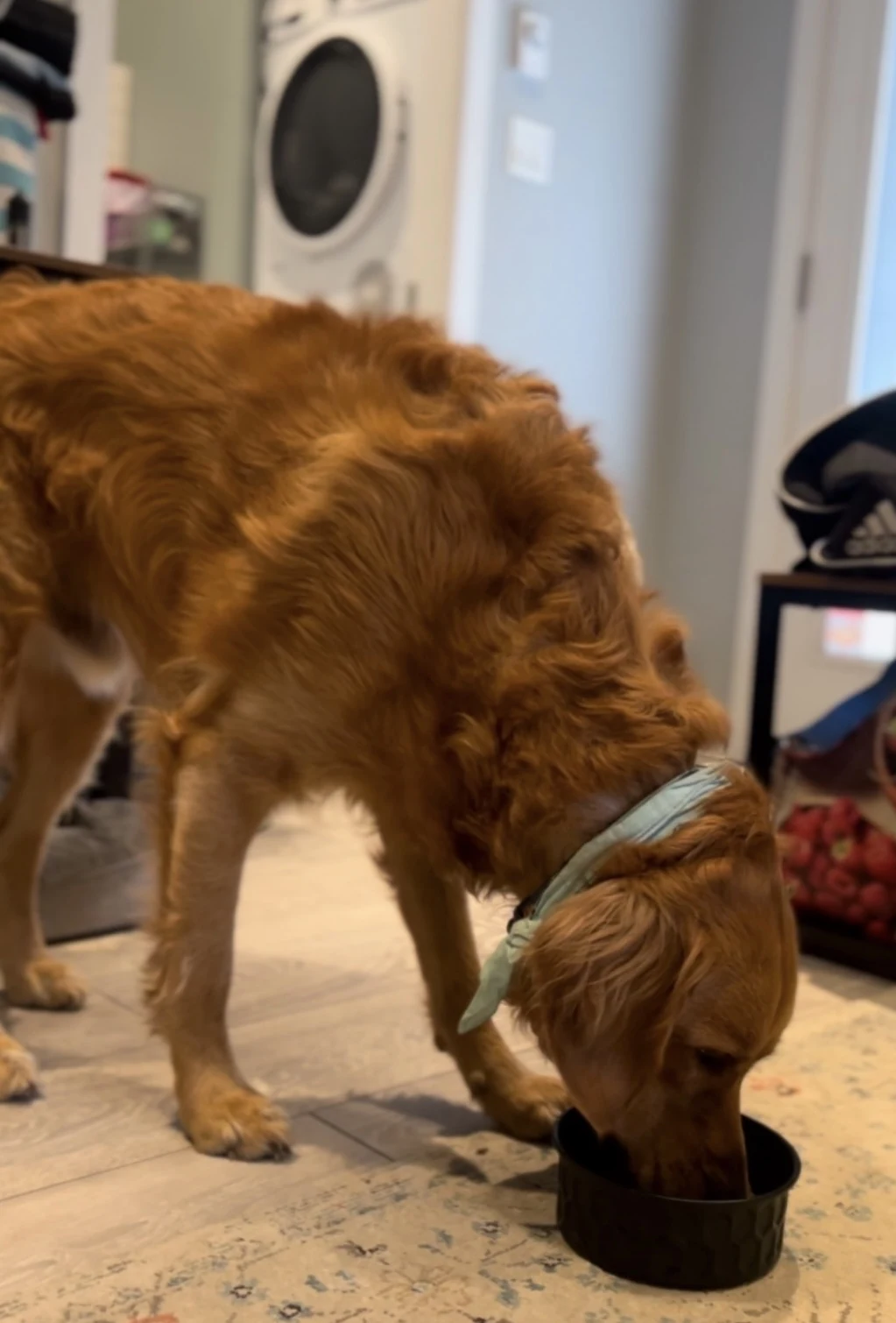
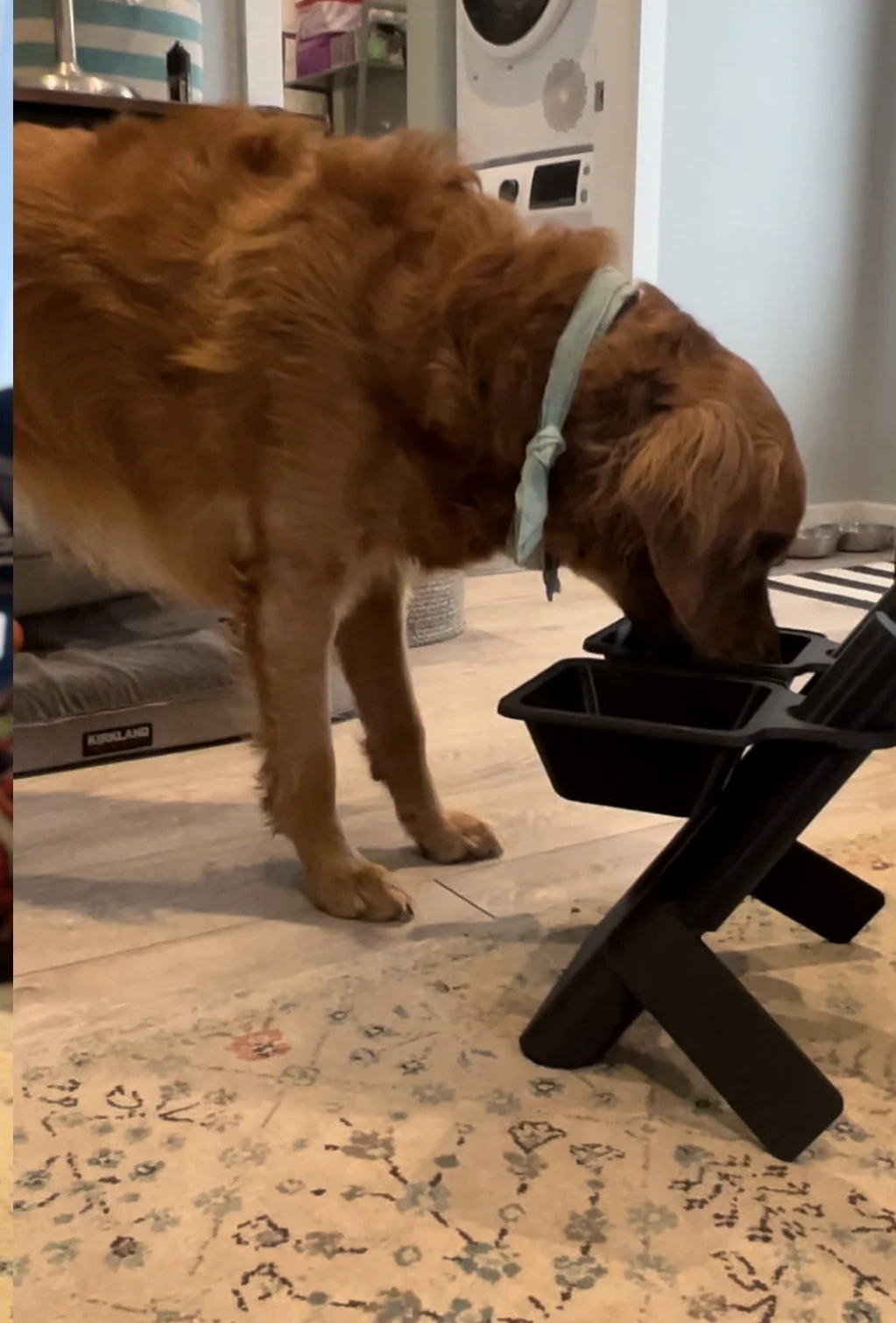
The right feeding position is individual. These real-world photographs show how the same two dogs position their heads and necks at floor level versus the elevated prototype. Here’s why adjustable height can matter—and where caution is essential.
Adjustability is about choice—not a claim that higher is always healthier.
A puppy’s proportions change as they grow. An older dog’s mobility may change, too. An adjustable stand provides options instead of one fixed feeding position.
Veterinary arthritis guidance describes raised food and water bowls as a possible home modification for some dogs with mobility difficulties. Whether elevation is suitable—and at what height—depends on the dog.
During informal trials, both test dogs appeared to eat more slowly from an elevated bowl. That is an owner observation, not a controlled finding or a promise that it will slow every dog’s meals.
A visible feeding-position comparison, not a medical trial. These photographs show posture at individual moments. They do not prove improved comfort, slower eating, better digestion, reduced bloat risk, or any treatment effect. Different dogs may need different feeding arrangements.
The early prototype has been used by two dogs. Alongside the real photographs, we have owner-reported observations about eating pace. These are useful questions for further testing—not clinical results or certified performance claims.
In informal trials, we observed slower feeding with bowls elevated than at floor level. We have not yet logged timed, repeated meals under controlled conditions; no general benefit is established.
Photographs show each test dog using floor-level and elevated setups. Head and neck position changes are visible; comfort, digestive effects and health outcomes are not established.
Measure movement under nudging, uneven floors and accidental side loads. No load-rating or tip-resistance result is available yet.
Verify height locking, bowl retention, fasteners and repeated folding cycles before making performance claims.
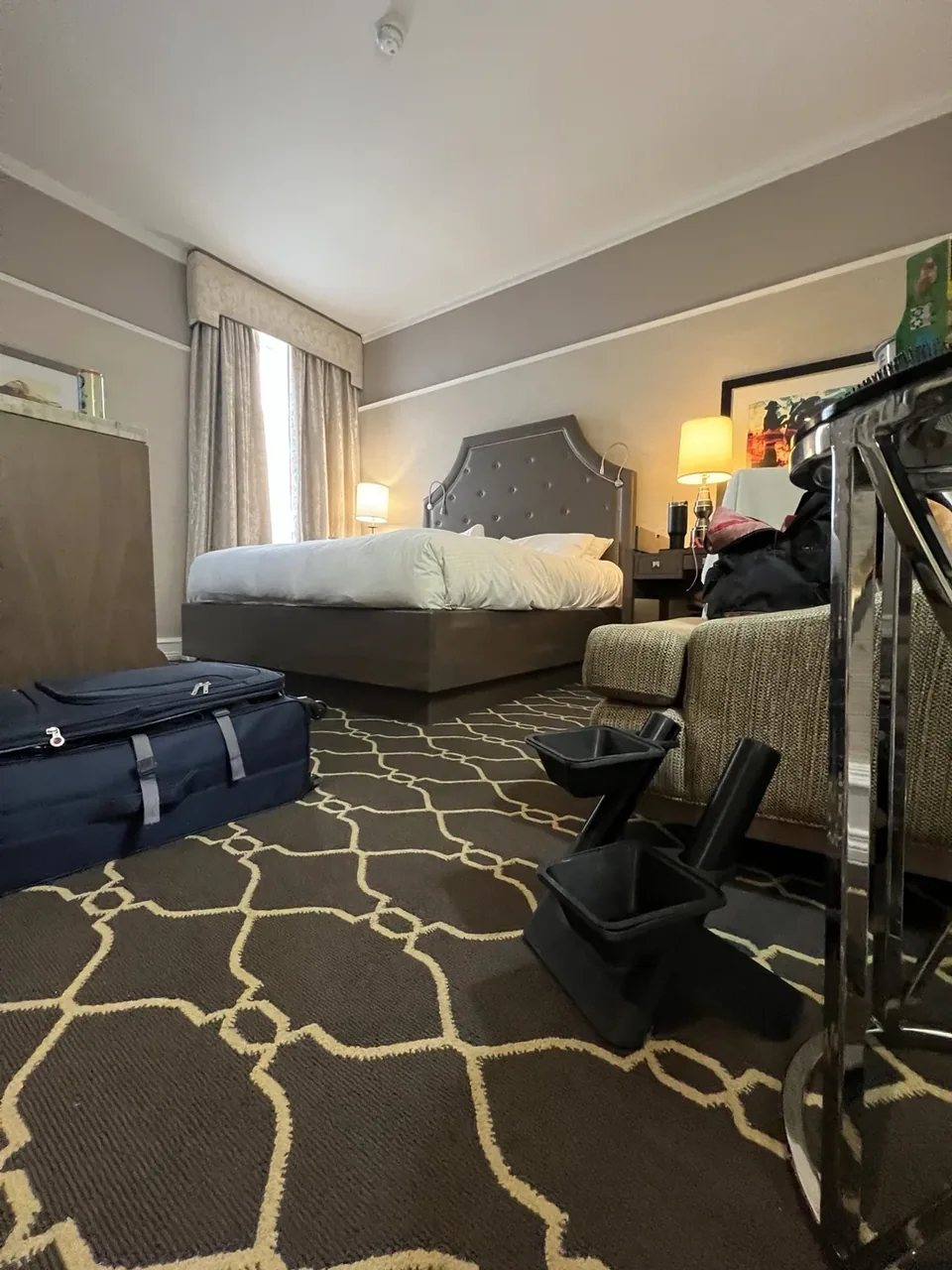
One dog. One dish. Endless adventures. Explore real prototype photos from home, the backyard, the trail, the beach, a hotel room and the workbench.
Real dogs. Real places. Real prototyping. These photographs show early physical prototypes across home, travel and outdoor situations, not final manufactured products. They do not establish load ratings, weather resistance, tip resistance, production fit, or veterinary benefits.
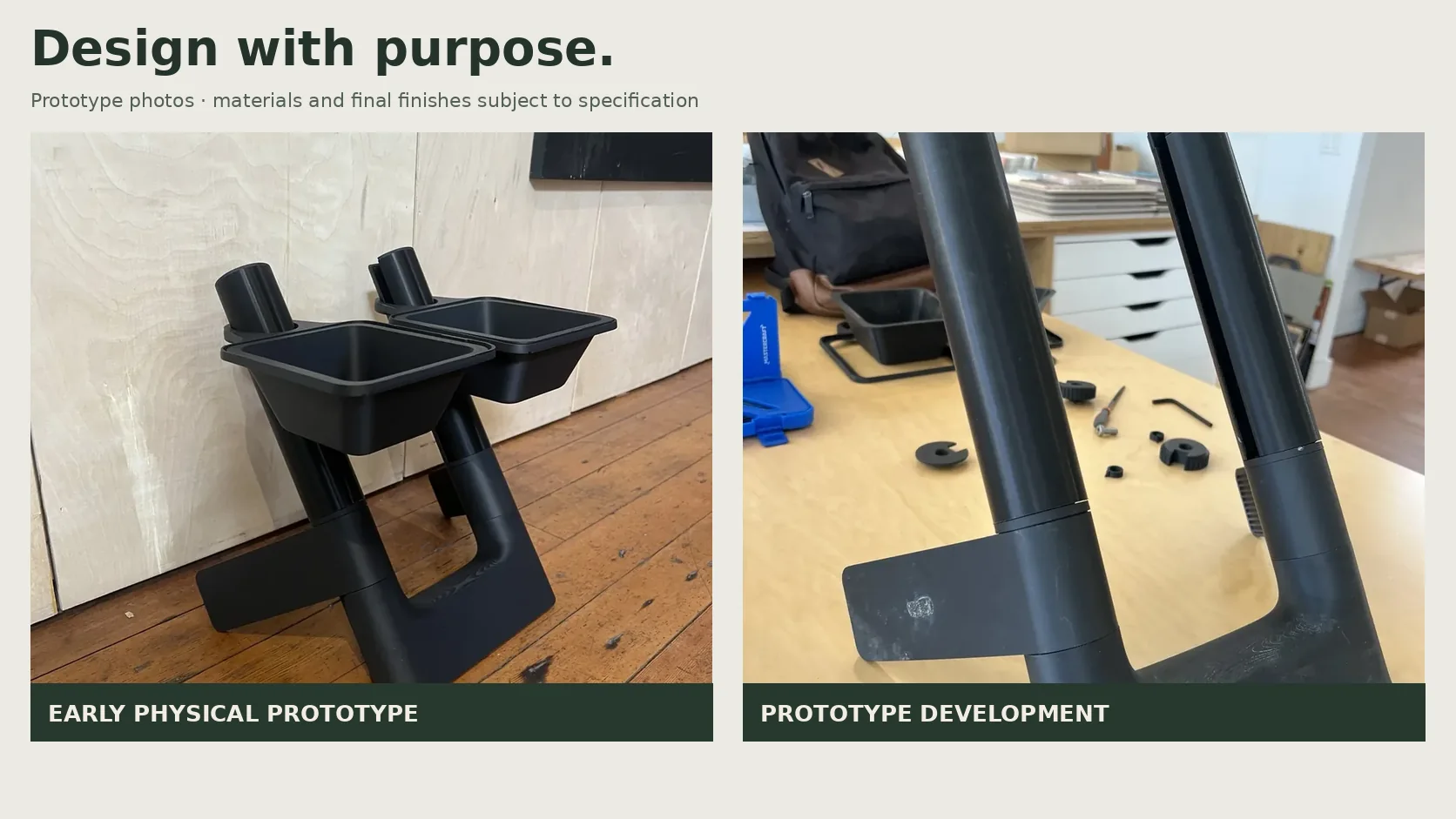
Meet DallasThe Dog D.A.D. — Dallas Adventure Dish — started with Dallas. Built to grow. Designed to go. The idea became a working prototype. The base, angled supports and small adjustment components have all gone through physical fabrication.
The development photographs above document the process, not a completed manufacturing or safety qualification. We are still working toward verified stability, adjustment limits and durable production materials.
See what still needs testing ↗Compare six proposed finish directions. Evergreen and Stone use the documented hexadecimal colour values; other on-screen tones are visual approximations. Production finishes may vary.
Not yet. This is a product concept under development. The showroom does not process orders, reservations or payments.
The prototype combines two independently positioned feeding bowls, 12 planned height settings, and a fold-flat travel configuration. This is still an evolving design, not a finalized production product.
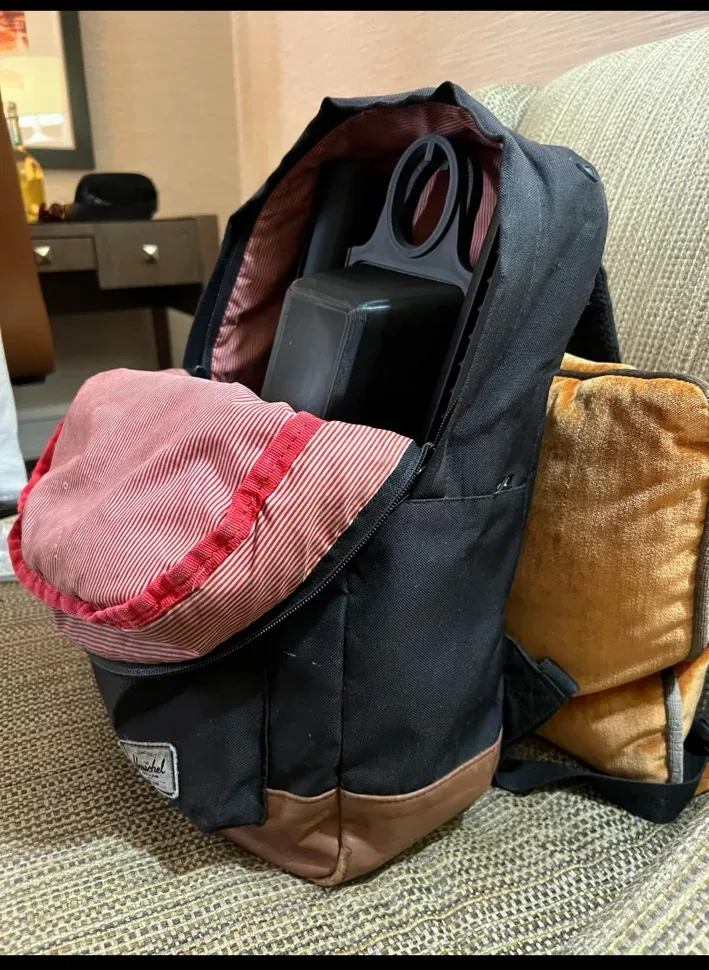
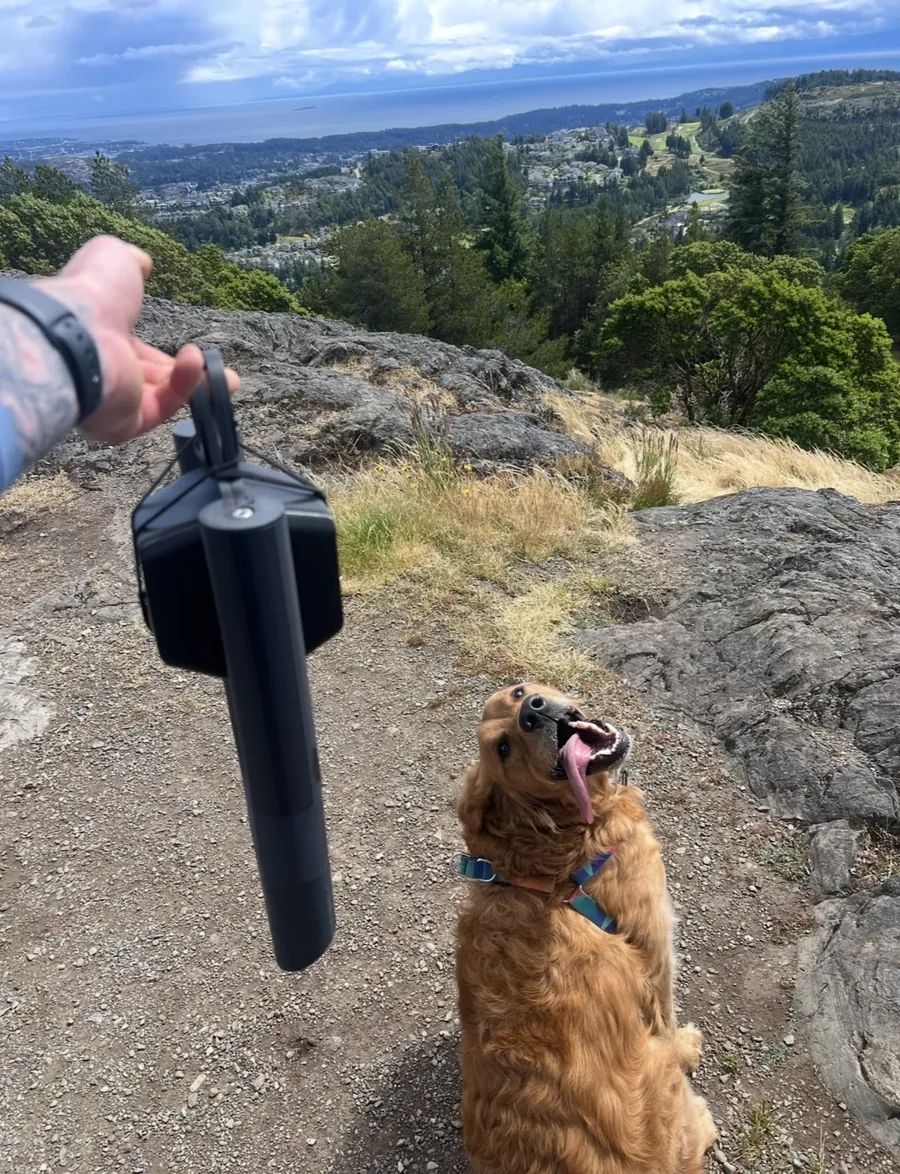
Yes, the early prototype folds flat and has been photographed carried by hand on a trail and folded inside a backpack. The two bowls can also be nested for a lower profile. Final dimensions, carrying fit and production durability are still being established.
The design has two packing configurations: stack one bowl inside the other to save space, or invert one bowl over the other to create a compartment intended for a portion of dry food. This is a prototype feature, not a tested airtight or leakproof container. Closure security, food-contact materials, and transport performance still need validation. Clean and dry the bowls before using the food-carry configuration.
Potentially. Veterinary arthritis guidance notes that raised bowls may help some dogs with mobility difficulties, but there is no universally best height. Raised food bowls can also increase GDV (bloat) risk in some dogs, especially large or deep-chested breeds. See Cornell’s GDV guidance. Ask your veterinarian which setup is suitable for your dog. The Dog D.A.D. has not been clinically evaluated.
In informal prototype use, we noticed both test dogs eating more slowly from elevated bowls than from bowls on the floor. This is an early personal observation, not a measured or independently verified result. It does not mean elevation will slow every dog, prevent gulping, or treat resource guarding. We plan to investigate this further with repeatable meal-timing tests.
There is no single appropriate elevated height for every breed, age, or size. We are exploring an educational setup guide for a future release, but it will not give individual veterinary advice. Until the physical settings are measured and the guidance reviewed, consult your veterinarian about elevated feeding—especially for dogs with mobility issues, digestive symptoms or GDV risk.
No. The render previews intended colourways and form. Materials, folding movement, adjustment range, dimensions and finish may change before production.
No. This public 3D viewer uses a reduced-detail marketing mesh, not the original engineering CAD. It communicates the visual concept only—not manufacturing tolerances, fit, stability or verified mechanisms.
Once connected, the signup button will take you to an external opt-in form explaining what emails to expect, how your information will be used and how to unsubscribe.